Magnetic Testing
Multifunctional Magneto-optical Kerr Microscopic Imaging System
Magneto-optic Kerr Effect (MOKE)
High-resolution MOKE microscopic imaging platform for visualising magnetic domains, studying magnetisation dynamics and performing combined spin transport measurements.
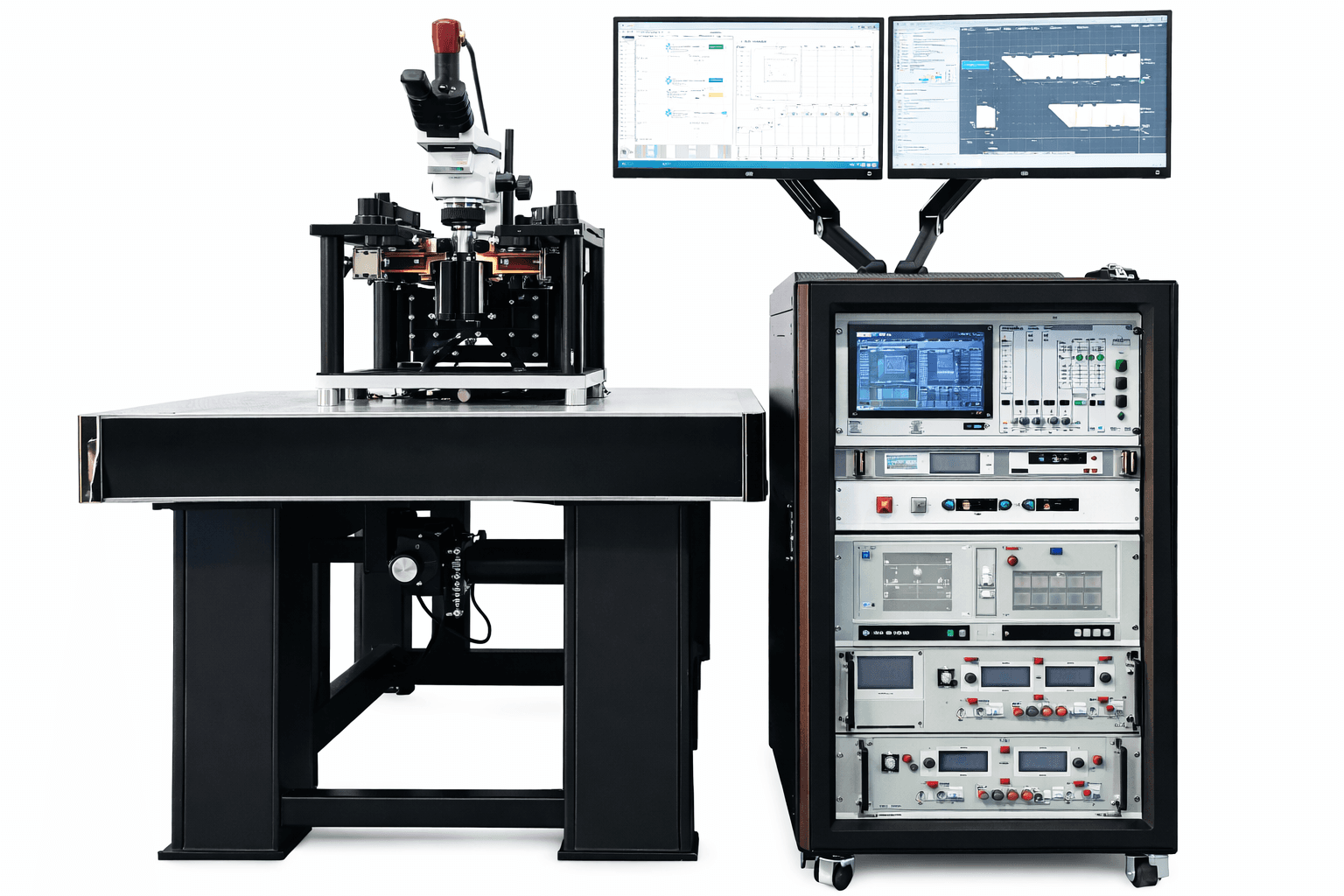
Product Overview
The Multifunctional Magneto-optical Kerr Microscopic Imaging System allows researchers to clearly observe the spatial distribution and time evolution of magnetisation states in magnetic materials and devices.
Using the magneto-optical Kerr effect (MOKE), the system provides high-resolution magnetic domain imaging and supports advanced research in magnetic materials and spintronic devices.
The system combines magnetic imaging, electrical transport testing and high-precision signal control, making it an ideal platform for both academic research and advanced magnetic device development.
Multifunctional Probe Station
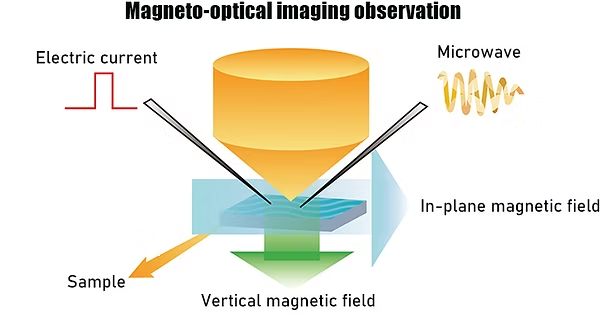
With in-plane magnetic field, vertical magnetic field and multiple DC/HF probe configurations, this system integrates magneto-optical imaging with spin transport testing.
Key capabilities include:
- Maximum vertical magnetic field: 1.8 T
- Maximum in-plane magnetic field: 1.4 T
- Variable temperature range: 4 K – 873 K
- Suitable for imaging research of hard magnetic materials
- Compatible with multiple DC and high-frequency probes
Multifunctional Control System
Test Signal Control
The control system synchronises multiple signals for advanced magnetic experiments. Test signal control includes:
- Vertical magnetic field
- In-plane magnetic field
- Current signals
- Microwave signals
All signals can be applied synchronously at microsecond (µs) level. Users can easily adjust:
- Signal waveform
- Amplitude
- Frequency
- Relative delay
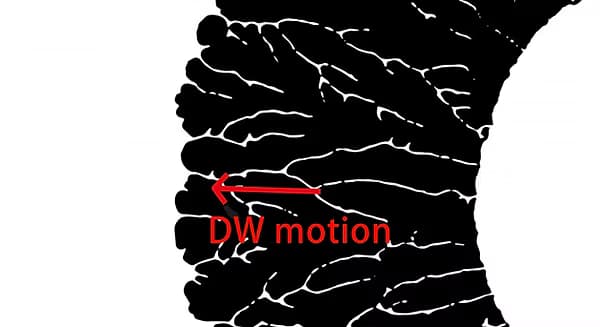
Image Processing
The system includes advanced image processing functions:
- Real-time background subtraction
- Automatic vibration drift correction
- Noise reduction for high-precision imaging
Signal Analysis
- Real-time display of magnetic field and current signals
- Kerr image–based hysteresis loop scanning
- Local analysis resolution up to 220 nm
Magnetic Domain Imaging
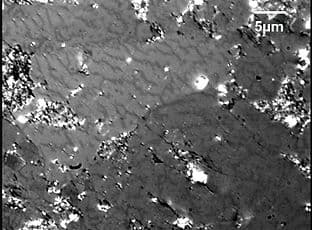
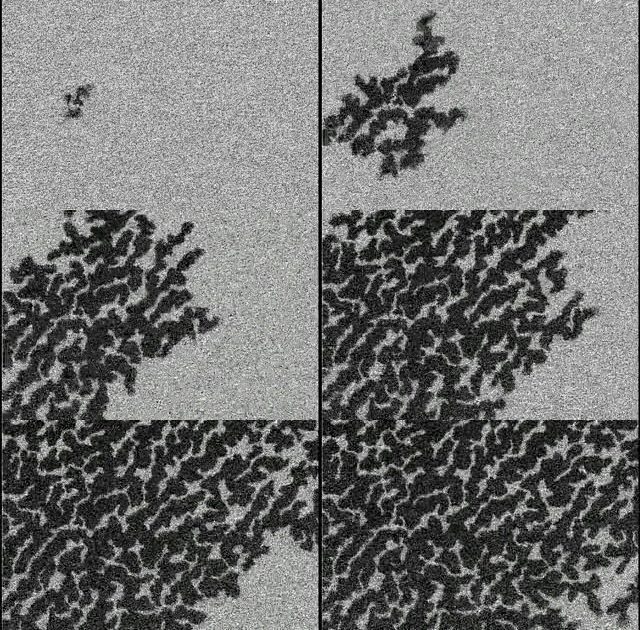
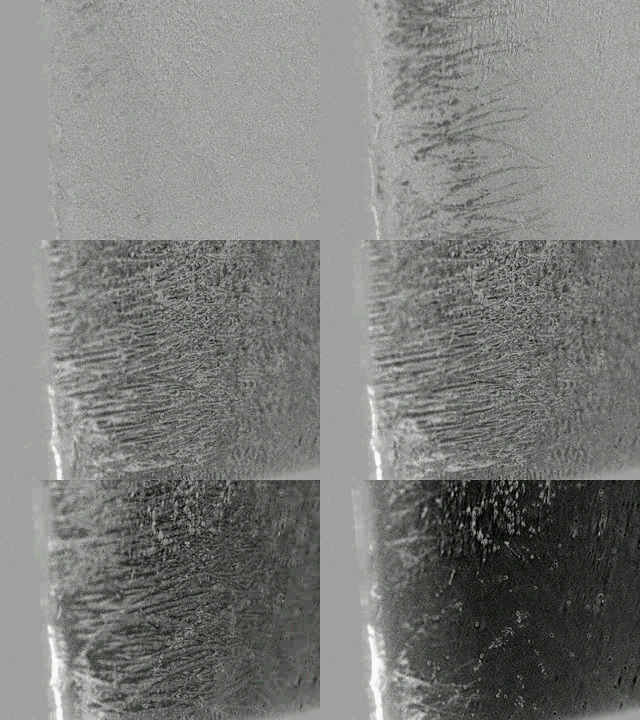
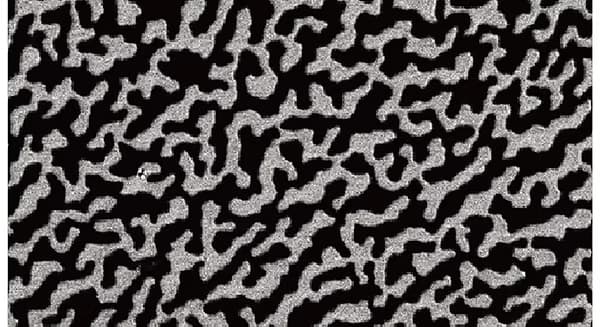
The system enables detailed observation of magnetic domain structures in various materials, including perpendicularly anisotropic thin films, nanofilm materials and silicon steel surfaces.
Typical Applications
Magnetic Material Quality Detection
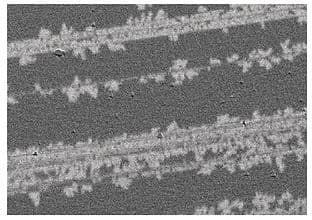
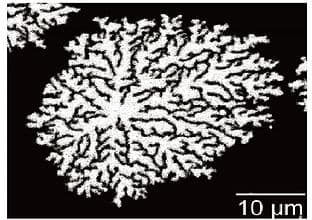
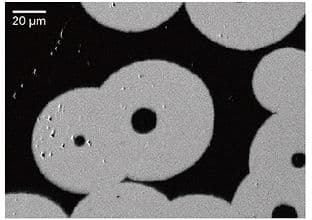
The system can be used to evaluate magnetic material quality, for example in MgO(sub)/Co/Pt samples. Mismatch between the MgO crystal substrate and Co lattice can cause film defects.
Example images include mismatch-induced defects, poor quality magnetic film with snowflake-like domain structures, and high quality films with uniform magnetic domains.
Defect Location Detection
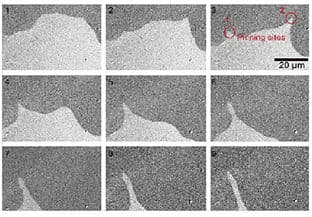
Magnetic domain walls deform near defects, producing a pinning effect. With high-resolution objectives, defect locations can be directly identified.
Spintronic Device Damage Detection
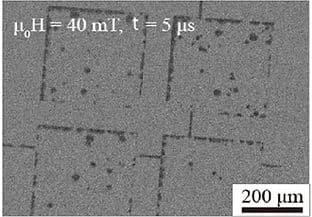
During microfabrication of spintronic devices, edge damage may occur. The system can detect magnetic instability caused by such damage.
Hysteresis Loop Analysis
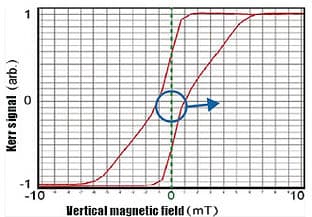
The Kerr imaging system enables detailed analysis of magnetic hysteresis behaviour, linking domain evolution to macroscopic hysteresis loops.
Characterisation of Magnetic Parameters
Kerr microscopy enables characterisation of many intrinsic magnetic parameters with local spatial resolution up to 220 nm.
Saturation Magnetisation (M)
Magnetic domain wall spacing under different magnetic fields can be used to extract the local saturation magnetisation.
Magnetic Anisotropy Energy (K)
By analysing Kerr image contrast changes, the equivalent anisotropy field and corresponding anisotropy energy can be obtained.
Exchange Interaction Constant (Aex)
Fourier analysis of magnetic domain structures allows extraction of the Heisenberg exchange interaction stiffness Aex.
Dzyaloshinskii–Moriya Interaction (DMI)
By observing asymmetric domain wall expansion under combined magnetic fields, the DMI interaction strength can be determined.
Magnetic Domain Wall Dynamics Study
The system can measure dynamic motion of magnetic domain walls under controlled magnetic field and current pulses.
Domain Wall Velocity Measurement
Method: apply magnetic field or current pulses with amplitude B and duration t, then measure displacement d of the domain wall from Kerr images. The domain wall velocity is given by:
v = d / t
Maximum measurable domain wall velocity is approximately 200 m/s.
Domain Wall Tension Effect
Asymmetric domain expansion under combined vertical and in-plane magnetic fields can be observed to study domain wall tension and stability.
Domain Wall Pinning Analysis
Magnetic field pulses can precisely control domain wall positions in nanowires and measure unpinning magnetic fields to quantify pinning strength and defect interactions.
Spin Transport Testing + Imaging
The system supports electrical measurements combined with Kerr imaging for comprehensive spin transport studies. Supported experiments include:
- Spin-transfer torque (STT) driven domain wall motion
- Current and magnetic field coupled domain dynamics
- Spin-orbit torque (SOT) switching analysis
With Keithley 6221 and 2182A instruments, the system can measure:
- Hall effect
- I–V characteristics
- Magnetoresistance (MR)
Additional microwave equipment allows:
- Spin torque ferromagnetic resonance (ST-FMR) measurements
- Second harmonic measurements
Imaging Performance
- Resolution: 220 nm (100× oil immersion objective)
- Resolution: 450 nm (long working distance objective)
- Maximum field of view: 1.2 mm × 1 mm
- Capable of detecting magnetic changes in two atomic layer thin films
Related Products
Explore adjacent systems and categories that are commonly evaluated together in hard magnetic testing workflows.