Multifunctional Probe Station
With in-plane magnetic field, vertical magnetic field and multiple DC/HF probe configurations, this system integrates magneto-optical imaging with spin transport testing.
Key capabilities include:
- Maximum vertical magnetic field: 1.8 T
- Maximum in-plane magnetic field: 1.4 T
- Variable temperature range: 4 K – 873 K
- Suitable for imaging research of hard magnetic materials
- Compatible with multiple DC and high-frequency probes
Multifunctional Control System
Test Signal Control
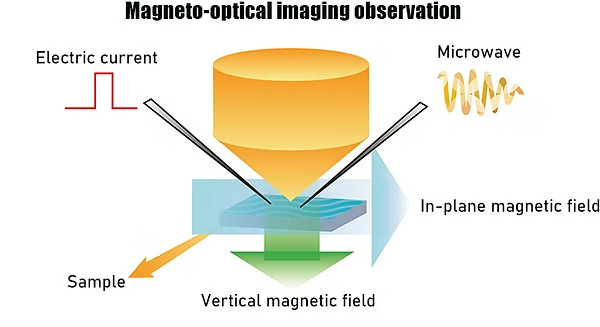
The control system synchronises multiple signals for advanced magnetic experiments. Signals include:
- Vertical magnetic field
- In-plane magnetic field
- Current signals
- Microwave signals
All signals can be applied synchronously at microsecond (µs) level. Users can adjust:
- Signal waveform
- Amplitude
- Frequency
- Relative delay
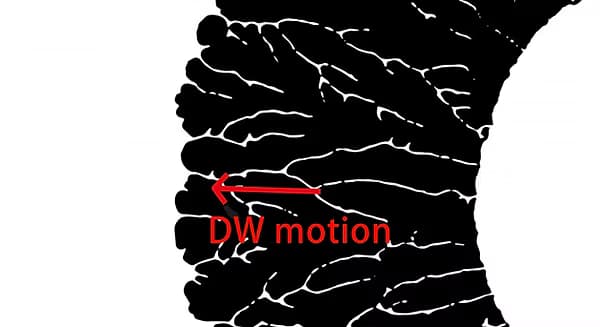
Image Processing
The system includes advanced image processing functions:
- Real-time background subtraction
- Automatic vibration drift correction
- Noise reduction for high-precision imaging
Signal Analysis
- Real-time display of magnetic field and current signals
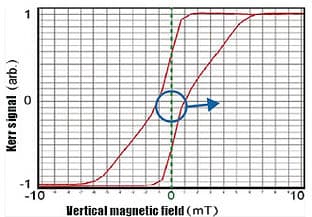
- Kerr image-based hysteresis loop scanning
- Local analysis resolution up to 220 nm
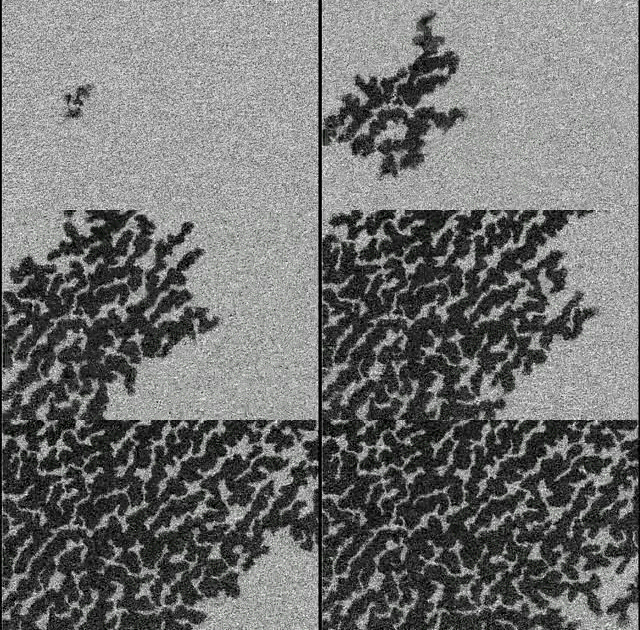
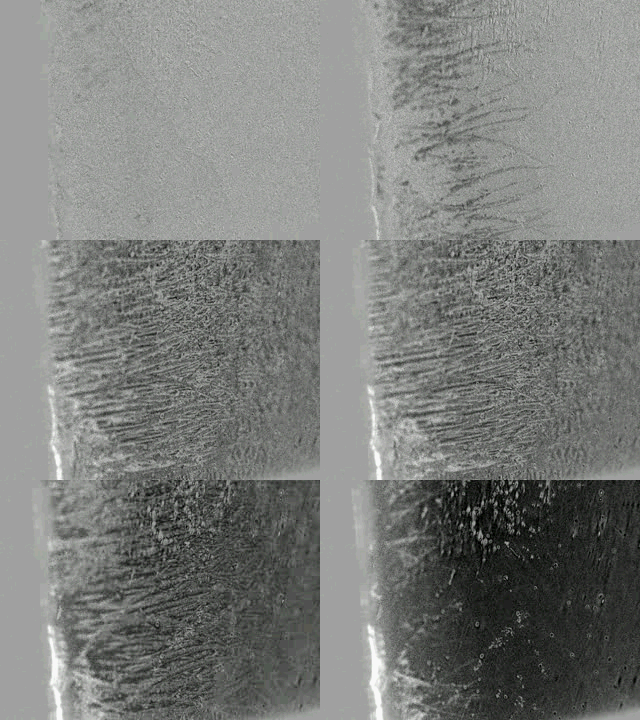
Magnetic Domain Imaging
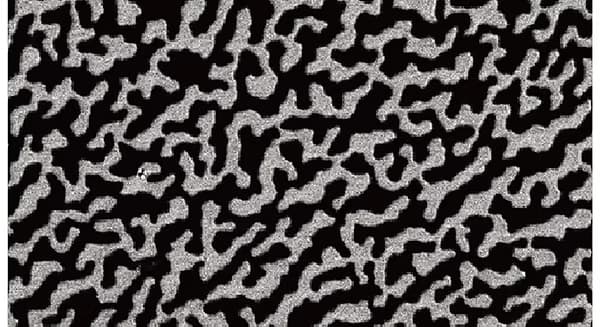
The system enables observation of magnetic domain structures in various materials including:
- Perpendicularly anisotropic thin films
- Nanofilm materials
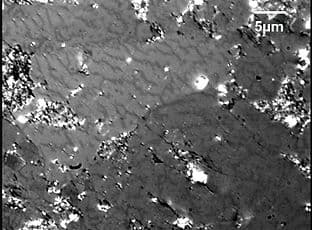
- Silicon steel surfaces
Typical Applications
Magnetic Material Quality Detection
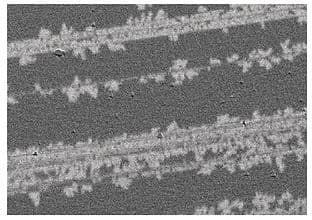
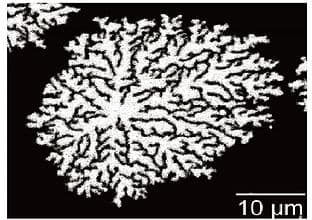
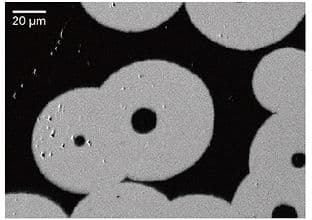
The system can evaluate magnetic material quality, for example in MgO(sub)/Co/Pt samples where lattice mismatch can cause film defects.
Defect Location Detection
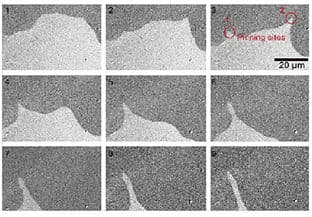
Magnetic domain walls deform near defects producing a pinning effect. With high-resolution objectives, defect locations can be directly identified.
Spintronic Device Damage Detection
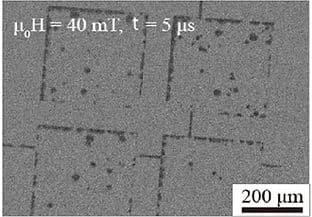
The system can detect magnetic instability caused by damage during microfabrication of spintronic devices.
Hysteresis Loop Analysis
The Kerr imaging system enables detailed analysis of magnetic hysteresis behaviour.
Characterisation of Magnetic Parameters
Kerr microscopy enables characterisation of intrinsic magnetic parameters with local spatial resolution up to 220 nm.
- Saturation magnetisation (M)
- Magnetic anisotropy energy (K)
- Exchange interaction constant (Aex)
- Dzyaloshinskii–Moriya interaction (DMI)
Magnetic Domain Wall Dynamics Study
The system can measure dynamic motion of magnetic domain walls.
Domain Wall Velocity
v = d / t
Maximum measurable domain wall velocity: ~200 m/s
Spin Transport Testing + Imaging
The system supports electrical measurements combined with Kerr imaging. Supported experiments include:
- Spin-transfer torque (STT) driven domain wall motion
- Current-field coupled domain dynamics
- Spin-orbit torque (SOT) switching analysis
With Keithley 6221 and 2182A instruments, the system can measure:
- Hall effect
- I-V characteristics
- Magnetoresistance (MR)
Additional microwave equipment enables:
- ST-FMR measurements
- Second harmonic measurements
Imaging Performance
- Resolution: 220 nm (100× oil immersion objective)
- Resolution: 450 nm (long working distance objective)
- Maximum field of view: 1.2 mm × 1 mm